


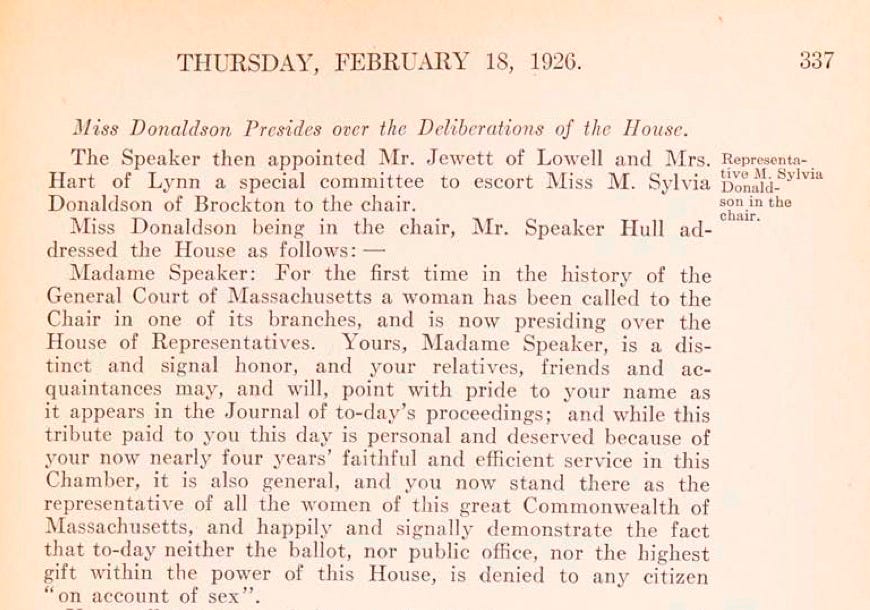
FEBRUARY 18, 1926: A wave of cheers and applause erupted as seventy-six-year-old Sylvia Donaldson rose from her chair in the third division of the Massachusetts House chamber. It was a rainy Thursday afternoon in the city of Boston, and history was about to be made.
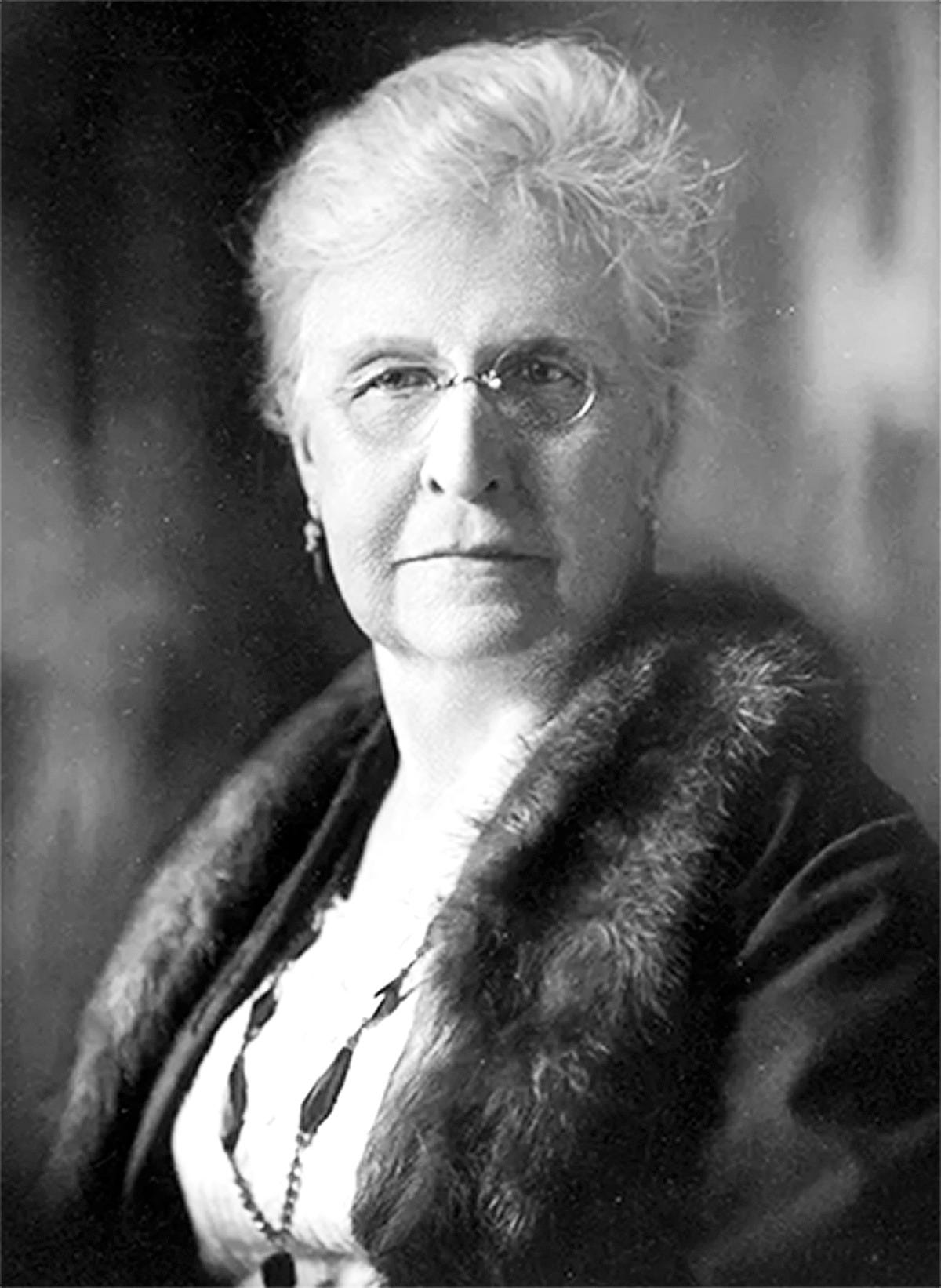
The retired schoolteacher from Brockton was hard to miss. Standing nearly six feet tall in a silk blue dress, with her white hair pulled back in a fashionable chignon and stern blue eyes staring behind a pair of dark spectacles, Donaldson was just one of only two female legislators. She gave off a stately and dignified air, and if she was in any way rattled by the attention now bestowed upon her, it did not show.
Donaldson laid down a pair of violet and rosebud bouquets she’d been given and made her way to the front of the House chamber which was teeming with spectators from the floor up to the visitor galleries. Accompanying her were Representative Victor Jewett of Lowell, a vinegar manufacturer who served as Majority Leader, and Representative Harriet Russell Hart of Lynn, a newly elected member and the only other woman serving in the state legislature.
House Speaker John Hull stood at the rostrum with his outstretched hand gripping a wooden gavel. Like Donaldson, Hull was a member of the Republican Party, which still dominated the 240-member chamber by a nearly three-to-one margin. The Republicans also held the state senate and the governor’s office, though Democrats were slowly increasing their ranks.
The extended applause continued as Donaldson approached Hull on the dais. After handing over his gavel, the speaker descended from the rostrum and took a seat on the floor with the rest of the House members. There were extra seats arrayed around the chamber to accommodate the many guests in attendance as news of the impending event had been shared in the local newspapers several days earlier.1
With their traditional roles now reversed, Donaldson stood at the rostrum wielding the speaker’s gavel and called on Hull from his seat. His next words would be a first in the nearly one-hundred-and-fifty-year history of the institution:
“Madame Speaker!”
“Yours, Madame Speaker, is a distinct and signal honor … you now stand there as the representative of all the women of this great Commonwealth of Massachusetts, and happily and signally demonstrate the fact that today neither the ballot, nor public office, nor the highest gift within the power of this House, is denied to any citizen ‘on account of sex’,” he continued.
“I, too, am honored on this occasion, because I have been permitted to be the first member of this ancient assembly to address the Chair as ‘Madame Speaker’. I hope that my relatives, friends and acquaintances may also point with pride, in the years to come, to this fact. … Madame Speaker, we who are about to subject ourselves to your guidance do so with full confidence in your integrity, ability and efficiency. Madame Speaker, we salute you!”
“Madame Speaker, we who are about to subject ourselves to your guidance do so with full confidence in your integrity, ability and efficiency. Madame Speaker, we salute you!” - House Speaker John Hull.
Hull wrapped up his brief remarks and returned to his seat while Donaldson remained standing on the rostrum. The House clerk stood to her right in his customary position, ready to offer assistance, but she needed none. As a two-term lawmaker with decades of classroom experience, she was comfortable in her role and well-schooled in the minutia of legislative procedure. Her father, George Washington Donaldson, had also been a state legislator himself.
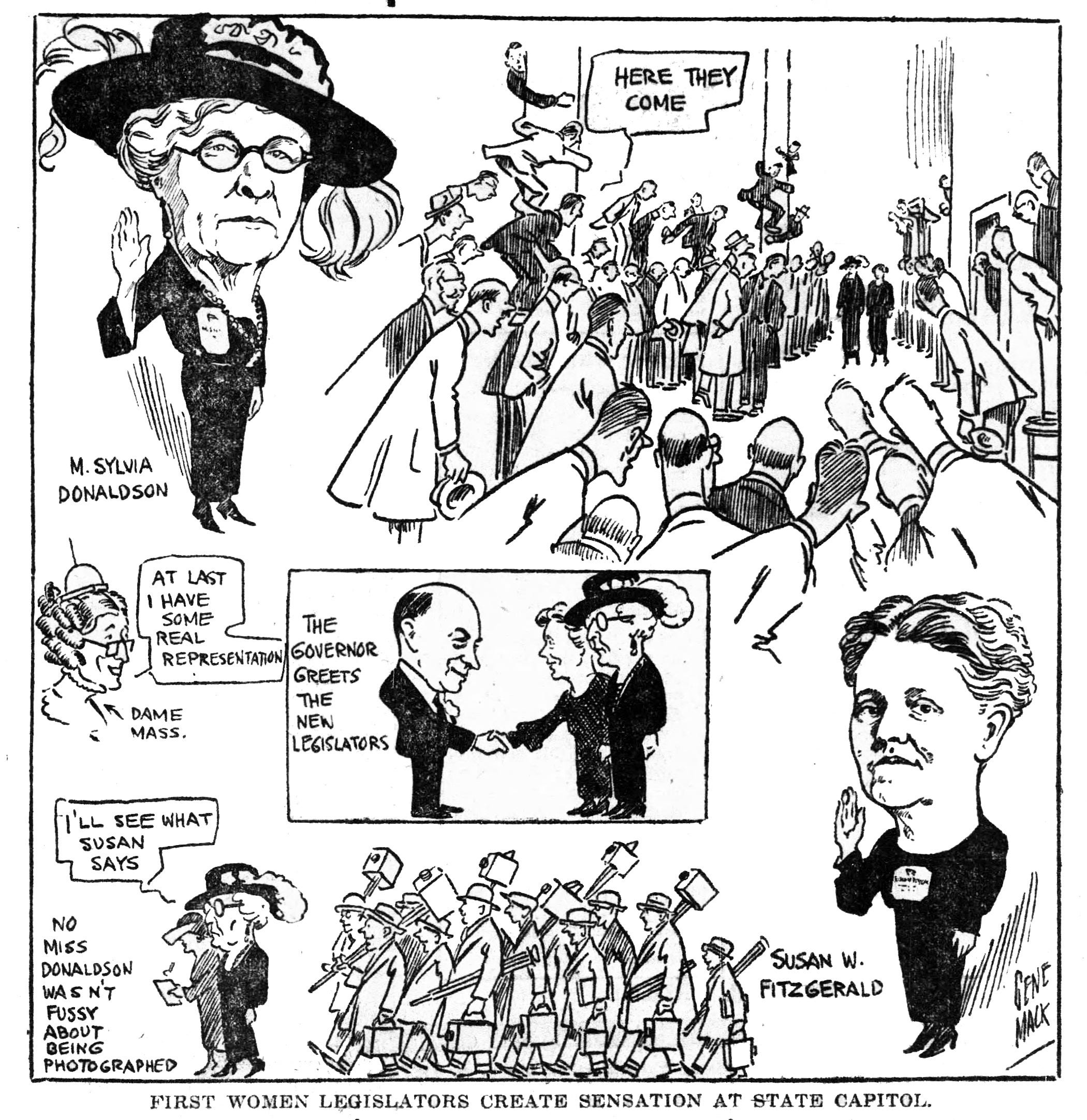
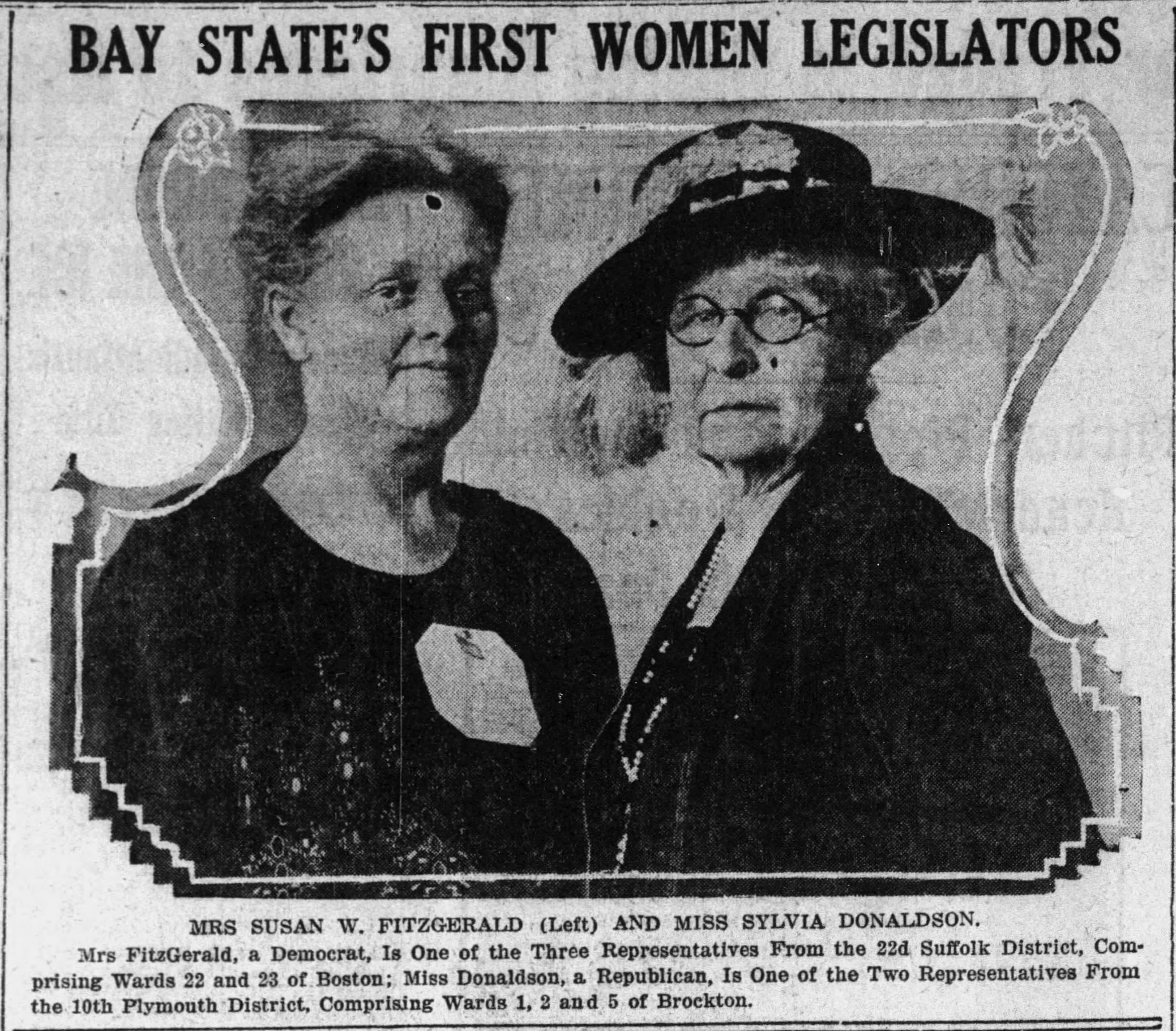
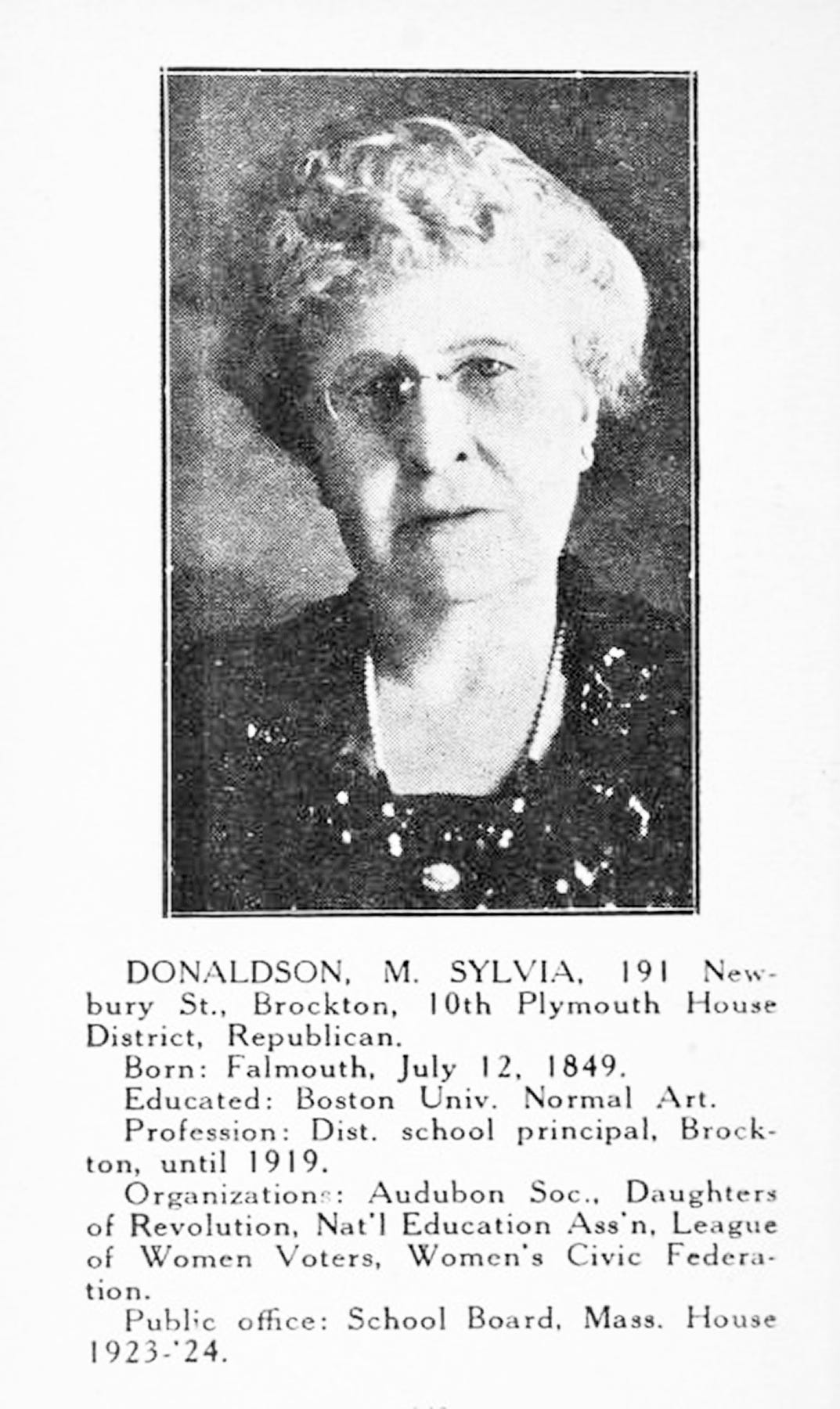
Donaldson was used to the extra attention that came with being one of the first-ever female members in the Massachusetts legislature. Donaldson won election in 1922 from one of two seats in the Tenth Plymouth District, a Republican stronghold in the city of Brockton. That same year Susan Fitzgerald, a Boston Democrat, was also voted in and the pair made history as the first women elected in the state’s history.
Sylvia Donaldson’s Path from Brockton Schoolteacher to Politics
THE ARRIVAL of two female legislators to the State House in January of 1923 was heralded as “a new era in the public life of the commonwealth,” coming two years after the ratification of the Nineteenth Amendment that formally gave women the right to vote.
Donaldson had retired from teaching in 1919 and was then elected to her local school committee.2 She remained active in her community as a member of the local Red Cross, Girl Scouts, and Brockton Women’s Club. She was originally from Falmouth and later moved to Brockton when it was still known as North Bridgewater.3 In the summer of 1922, she announced her candidacy for the state legislature and later that fall earned 3,306 votes, outpacing her nearest Democratic opponent by nearly four hundred votes.
On the morning of her inauguration Donaldson had taken the 8:17 a.m. train in from Brockton. A new private lounging room for female legislators had been set up near the fourth-floor gallery so that the women would not be forced to endure the regular smoke-filled House members’ lounge where the men congregated.
Throngs of newspaper photographers followed her around the building, though she did not much care for the press and initially refused to have her picture taken at all. Her colleague and fellow trailblazer, Representative Fitzgerald, was less camera shy and eagerly chatted up the coterie of staffers, journalists, and curiosity seekers who flocked around the two new arrivals.
After attending a morning caucus with her fellow Republicans, Donaldson was ushered into the office of Governor Channing Cox for a private swearing in ceremony. The governor administered the oath of office and then posed with the women on the State House balcony overlooking the Boston Common. The added pomp and circumstance delayed the women and they ended up being a few minutes late for their inaugural House session.
Donaldson had worn a stately blue hat with gray flowers and “a drooping lane of gray ostrich” along the brim for the occasion, not realizing that hats ran afoul of the House rules of decorum. She learned her lesson quickly and in the four years since had certainly earned the respect of her peers and the voters of her district. (Her colleague Rep. Fitzgerald was less fortunate and lost her bid for re-election the following term.)
AFTER THE APPLAUSE in the chamber had subsided, Donaldson gaveled the House to order and settled into her role as “Madame Speaker.” While she certainly appreciated the significance of the moment, she chose not to offer any public remarks of her own but instead plunged into legislative business, which on this day included handling a variety of appropriation bills, orders, committee reports, senate amendments, and roll call votes.
Unaccustomed as they were to the new title of the presiding officer, some of the representatives mistakenly addressed her as “Mr. Speaker,” while others––no doubt cognizant of the added attention on the day’s proceedings––went out of their way to flatter, speechify, or pontificate. One of the younger democratic members noted the “grace and charm” of the presiding officer.
Why Suffragists Were Divided on Representative Donaldson
The women who packed the visitor’s gallery for the historic occasion cheered heartily for Donaldson, but they were not always thrilled with her political views. Earlier in the day, Donaldson had testified against legislation prioritized by the League of Women Voters and the Mass. Council of Women to make women eligible for jury service. Donaldson did not believe women should be compelled to serve and spoke out against the measure at a Judiciary Committee hearing crowded with nearly two hundred supporters.
Donaldson may have been a women’s rights pioneer, but her policy views tended to be more traditional. “I have never asked a concession of the male members and I hope the other women will adopt the same course,” she would later say.4
Rumors abounded that some of the advocates would boycott the history-making afternoon session to rebuke Donaldson for what they felt were her insufficiently progressive views. In the end any lingering bad feelings were overcome by the significance and pride in Donaldson’s recognition and the women filled the overflowing galleries to show her their support.
Donaldson plowed through the remainder of the House docket without incident. The afternoon’s business included a Senate amendment on the hunting of deer on state forest reservations and a House bill governing the use of political designations in Boston city elections. Two roll calls were held, with several speeches and plenty of debate sprinkled in between.
Her colleagues and the press accounts offered high marks for her performance and poise. “The previous question was moved, and she uncompromisingly shut off debate at the proper time and put the question,” one newspaper recounted. “Years of training as a ‘school ma’am’ stood ‘Madame Speaker’ in good stead, for she went through the business on the House calendar without a sign of nervousness and with a degree of assurance seldom displayed by men substituting for the speaker,” wrote another.5
With the business of the House completed a motion to adjourn was accepted and Donaldson banged her gavel at 4:26 p.m. to end the session. Another burst of applause erupted as she laid down her gavel and stepped down from the rostrum as she was quickly surrounded by a jubilant mass of colleagues and supporters eager to bask in the history making day.
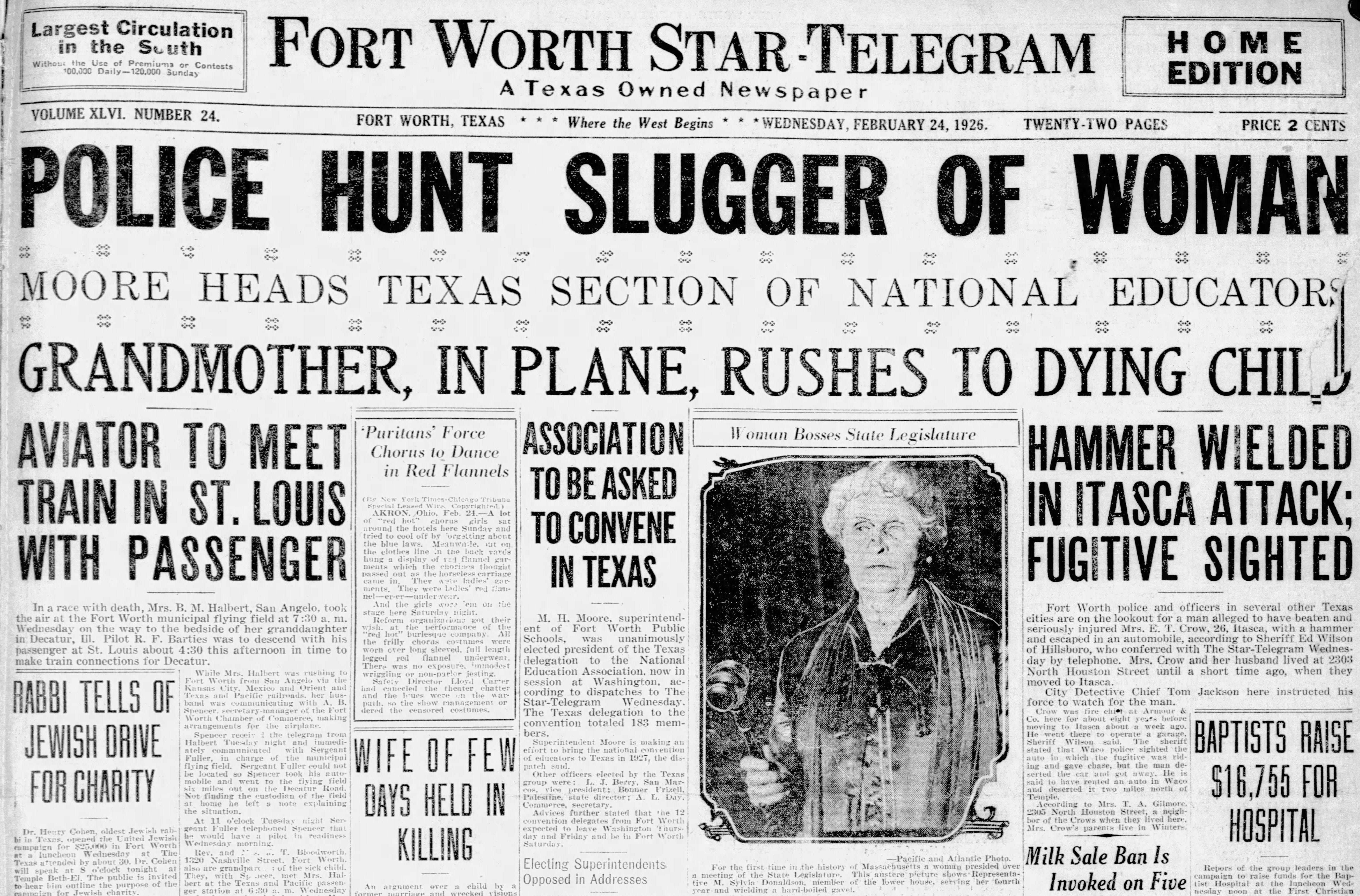
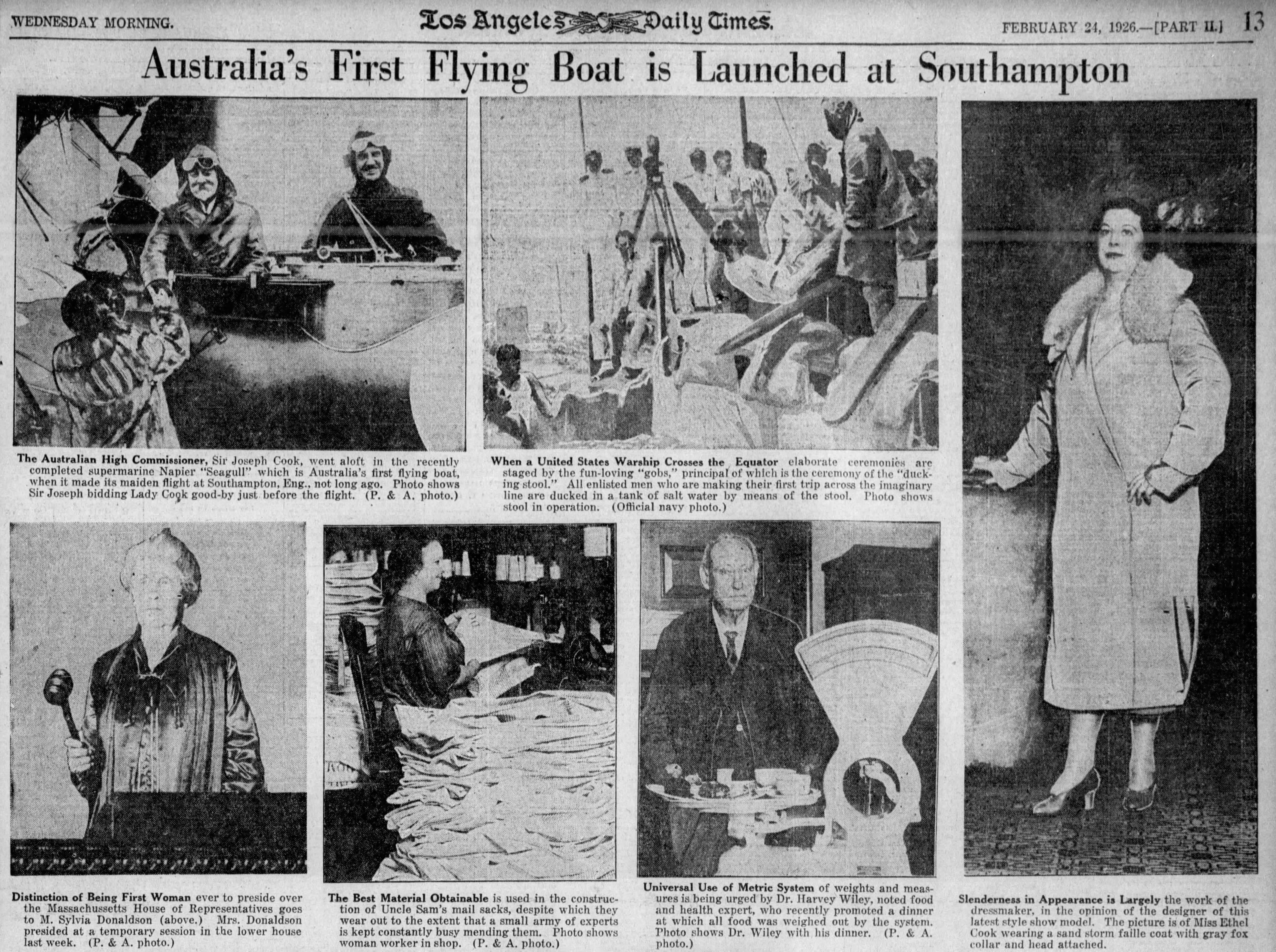
Donaldson’s barrier-breaking session made national news and was covered in the press from Maine to California. The South Bend Tribune ran an austere looking photo of Donaldson with a brief news article on their front page, as did the Burlington Free Press and the Minneapolis Star. “She wields a snappy gavel,” quipped the New Britain Herald,6 while a Texas newspaper described her wielding “a hard-boiled gavel.”7 The Los Angeles Times published a photo of Donaldson holding her gavel in a news photo collage. Lengthier accounts were published in the Boston area press including the Boston Daily Globe and Boston Herald, which carried a large front-page photo of Donaldson standing at the House rostrum surrounded by men.
The Years That Followed
By the next day Donaldson was back in her regular House seat in the third division. Her new-found celebrity brought more speaking invitations and meeting requests, but her typical modesty and conservative outlook remained unchanged. She was a frequent guest at local Rotary and women’s club meetings and occasionally travelled around to support other women running for public office.
Her electoral success was cited by other women who aspired to ride her coattails. One local candidate from Quincy touted Donaldson’s accomplishments and admonished her local supporters to follow in the city of Brockton’s footsteps in supporting a female candidate. “You, men of Quincy, if Brockton could put a woman in office, you can do no less,” she said.8
Donaldson had a medical issue with her eye that sidelined her for a short time, but she returned to work soon thereafter and ran for a third term later that fall. Her successful campaign cost $58.16.9 This time she was one of three women elected to serve in the legislature. The ranks of women increased slowly and by her fourth term she was one of five female House members.
By 1930, the partisan tides had shifted and the city of Brockton was no longer a Republican stronghold. Donaldson and her fellow Republican, in what was now the Ninth Plymouth District, were swept out of office and replaced by a pair of Democrats. It was part of a broader trend that saw Democrats also take the governor’s office and a U.S. Senate seat.
In 1937, at the age of eighty-five, Donaldson broke her hip in a fall and later died of her injuries. The first line of her obituary notice heralded her as the first woman ever to preside over the Massachusetts House of Representatives.10
Notes
1 New York Times, February 11, 1926, 3.
2 Since 1879, Massachusetts women were able to vote in local school committee elections.
3 The town of North Bridgewater became the town of Brockton (later city) in the spring of 1874. The names Avon and Allerton were also considered, but Brockton won out. See Boston Post, May 5, 1874, 3.
4 Boston Globe, January 9, 1929, 24.
5 Springfield Republican, February 19, 1923, 1.
6 New Britain Herald, February 22, 1926, 12.
7 Fort Worth Star Telegram, February 24, 1926, 1.
8 Quincy Patriot Ledger, September 8, 1926, 3.
9 Boston Herald, October 8, 1926, 8.
10 Boston Globe, June 16, 1937, 29.
See also
🔥